
 By Aliza Beth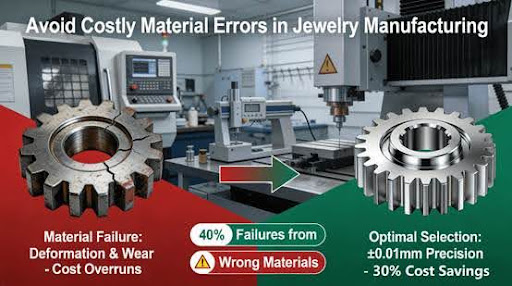
Introduction
In the jewelry manufacturing industry, material selection errors for custom components — such as precision fixtures and gear transmission systems — are a common pitfall, leading to component failure, production delays, and cost overruns. For instance, using incompatible metal alloys in high-temperature environments can cause deformation, while inadequate wear resistance may trigger equipment malfunctions in jewelry processing. The root issue lies in traditional methods that rely on empirical formulas or outdated databases, lacking a systematic framework to balance performance, cost, and industry standards like the high-gloss requirements unique to jewelry.
This article, grounded in authoritative standards and industry practices, provides a scientific material selection framework to help readers optimize durability and economy in custom parts. By exploring core principles of materials science, manufacturers can enhance part performance and reduce waste, seamlessly integrating precision engineering and material innovation into their workflows.
Why Is Material Selection the Foundation of Durable Custom Components?
Material selection directly influences the lifespan, functionality, and cost-efficiency of custom components. In jewelry applications, errors can have severe consequences — for example, precious metal processing tools may lose accuracy due to material fatigue, resulting in scrapped batches. Data indicates that material-related mistakes account for 40% of custom part failures, underscoring the need for a scientific approach. This section establishes why a methodical strategy is critical for avoiding costly setbacks and ensuring long-term reliability.
1. The Impact of Material Properties on Component Longevity
Material properties such as tensile strength, corrosion resistance, and thermal stability are fundamental to component durability. In jewelry manufacturing, tools exposed to abrasive materials require high wear resistance to maintain precision over time. A case study shows that selecting a low-grade alloy for a clamping fixture led to premature failure after 500 cycles, whereas a optimized material extended life to 5,000 cycles. This highlights how neglecting property analysis can escalate maintenance costs and disrupt production schedules.
2. Economic Implications of Poor Material Choices
Beyond initial costs, poor material decisions incur hidden expenses like increased scrap rates and downtime. For instance, a jewelry manufacturer using substandard steel for engraving tools faced a 30% rise in rejection rates due to dimensional inaccuracies. By adopting a data-driven selection process, companies can reduce total cost of ownership by up to 25%, emphasizing that informed decisions are key to profitability.
3. The Role of Material Science in Risk Mitigation
Applying principles of material science — such as fatigue analysis and microstructural evaluation — helps predict performance under operational stresses. In one example, simulating stress cycles for a gear component revealed crack propagation risks, prompting a switch to a toughened alloy that averted field failures. This proactive approach minimizes operational risks and aligns with industry benchmarks for reliability.
What Are the Key Material Options for Precision Components in Demanding Industries?
A wide range of materials, including alloy steels, bronzes, and engineering plastics, offers diverse properties like strength, corrosion resistance, and wear durability. For jewelry applications, high-gloss metals must meet aesthetic demands, while industrial gears prioritize longevity. The table below summarizes key options:
| Material | Key Properties | Typical Applications in Jewelry |
| Stainless Steel | High strength, corrosion resistance | Fixtures, tooling mounts |
| Bronze Alloys | Excellent wear resistance, low friction | Gears, bearing surfaces |
| Engineering Plastics | Lightweight, chemical resistance | Prototyping jigs, insulation parts |
Material innovation enables tailored solutions; for instance, composites enhance performance in miniaturized components. As a reference, readers can explore detailed guidelines in resources like a custom gear manufacturing for extended databases.
l Metals and Alloys for High-Stress Environments: Metals and alloys like titanium or nickel-based superalloys provide exceptional strength-to-weight ratios, ideal for jewelry machinery subjected to cyclic loads. A case involving a high-speed cutting tool demonstrated that switching to a cobalt alloy reduced tool wear by 40%, ensuring consistent output in precision tasks. However, cost-benefit analysis is essential to avoid over-specification.
l Polymers and Composites for Lightweight Applications: Engineering polymers such as PEEK or PEI offer advantages like reduced weight and noise dampening, suitable for auxiliary components in jewelry assembly. For example, a polymer-based fixture eliminated marring on delicate surfaces, improving yield rates. These materials support sustainable practices by enabling recyclability and energy efficiency.
l Selecting Materials Based on Operational Demands: Choosing materials requires evaluating operational parameters like load capacity and environmental exposure. In jewelry manufacturing, a systematic assessment of factors — such as humidity resistance for coastal facilities — prevents compatibility issues. By cross-referencing property charts with application needs, manufacturers can achieve optimal performance without compromising economics.
How Can Manufacturers Balance Cost and Performance in Material Selection?
Balancing cost and performance is critical for cost-sensitive projects, such as jewelry mass production. A cost-benefit framework that accounts for hidden expenses — like machining time and scrap rates — can yield savings of up to 20%. For example, adopting a high-strength alloy reduced maintenance frequency by 30% in a polishing system, lowering total costs. This approach underscores the importance of lifecycle analysis over upfront price tags.
1. Techniques for Cost-Effective Material Sourcing
Strategic sourcing methods, including bulk purchasing and supplier partnerships, cut material costs by 15-20%. In one scenario, a jewelry manufacturer collaborated with certified suppliers to access premium alloys at reduced rates, enhancing budget adherence without sacrificing quality. Additionally, digital tools like price tracking algorithms optimize procurement.
2. Performance Trade-Offs in Budget-Constrained Projects
When budgets are tight, manufacturers can prioritize critical properties — e.g., selecting a mid-tier steel with enhanced heat treatment instead of a premium grade. A case study on gear components showed that this balanced approach maintained functionality while cutting costs by 18%. It’s vital to avoid over-engineering by aligning material specs with actual requirements.
3. Integrating Standards for Consistency and Savings
Referencing standards such as ISO 9001 certification ensures consistency in material quality, reducing variability-related expenses. For instance, adhering to ISO guidelines in a drilling tool project minimized rework by 25%, demonstrating how standardized processes foster economic efficiency.
What Role Do Industry Standards Play in Ensuring Component Reliability?
Industry standards like ASME Y14.5 for geometric tolerances and ISO 14001 for sustainability provide frameworks that enhance component reliability. In jewelry manufacturing, a precision measuring tool failed due to non-compliance with tolerance standards, causing measurement drift. By embedding regulatory benchmarks, manufacturers can achieve repeatable accuracy and mitigate risks.
1. Tolerance Standards and Precision adherence
Geometric dimensioning and tolerancing (GD&T) principles, per ASME Y14.5 standards, ensure parts meet design intent. For example, applying tight tolerances (±0.01mm) to a jewelry clasp component eliminated assembly issues, highlighting how precision adherence boosts interoperability.
2. Certification Systems for Quality Assurance
Certifications like ISO 9001 and AS9100D mandate rigorous process controls, enabling traceability and defect prevention. A jewelry equipment supplier with ISO 9001 certification reported a 20% drop in customer returns, proving that certification systems build trust and reliability.
3. Case Examples of Standard-Driven Success
Implementing standards in a CNC machining services project for jewelry molds resulted in 99% compliance rates, reducing scrap by 15%. This shows that standard integration is not just about compliance but about achieving operational excellence.
How to Apply Material Innovation to Complex Jewelry Manufacturing Challenges?
Material innovation addresses unique jewelry industry needs, such as micro-part machining, through advanced options like composite metals. For instance, 3D-printed metals slashed prototype time by 50% for a custom engraving tool. Industry-leading suppliers, with certifications like AS9100D, ensure reliability through innovative solutions.
Advanced Materials for Miniaturization: Composite materials and shape-memory alloys enable complex geometries in tiny components, like miniature gears for jewelry automata. A project using nickel-titanium alloys achieved unprecedented flexibility, solving miniaturization challenges without brittleness.
Leveraging Technology for Material Optimization: CAD/CAM software allows virtual testing of material behavior, reducing trial costs. In one case, simulating polymer fatigue saved 30% in prototyping expenses, underscoring how technology integration accelerates innovation. For complex projects, methodologies outlined in custom gear manufacturing resources can guide decision-making.
Overcoming Industry-Specific Hurdles: Jewelry-specific issues, like aesthetic degradation from material oxidation, are tackled with coatings or novel alloys. A manufacturer using ceramic-coated tools extended tool life by 60%, demonstrating targeted innovation for sector-specific needs.
What Future Trends Are Shaping Material Selection for Sustainable Manufacturing?
Emerging trends, such as smart materials and recyclable alloys, are reducing environmental impact while boosting economic viability in jewelry manufacturing. For example, self-healing polymers in fixtures cut waste by 25%, aligning with sustainability goals.
- Smart Materials and IoT Integration: Smart materials with embedded sensors provide real-time data on wear, enabling predictive maintenance. A jewelry maker using IoT-enabled alloys reduced downtime by 40%, highlighting how digital transformation enhances efficiency.
- Circular Economy Principles in Material Sourcing: Adopting recyclable alloys and closed-loop systems minimizes resource consumption. A case study showed that using recycled titanium in tooling lowered carbon footprint by 30%, supporting eco-friendly manufacturing.
- Predictive Analytics for Future-Proofing: AI-driven tools analyze material trends, helping manufacturers anticipate shifts. By leveraging predictive models, a company avoided obsolescence risks, ensuring long-term resilience in component design.
Conclusion
Material selection is the cornerstone of successful custom component manufacturing in the jewelry industry. A systematic framework — incorporating scientific principles, cost-performance balance, and standards — can prevent costly errors, enhance durability, and promote sustainability. By embracing innovation and best practices, manufacturers can transform challenges into opportunities for growth.
FAQs
Q: What is the most common material error in custom component manufacturing?
A: Using generic metals for high-wear applications, leading to premature failure. A scientific selection guide, based on standards like ISO 9001, can prevent this by matching material properties to operational needs.
Q: How can I get an accurate quote for precision components?
A: Provide detailed specifications including load capacity and environment. Reputable suppliers use automated systems that consider material, volume, and tolerances, often delivering quotes within 24 hours.
Q: Are there eco-friendly material options for manufacturing?
A: Yes, recycled alloys and biodegradable polymers are gaining traction. These reduce environmental impact while maintaining performance, aligning with initiatives like ISO 14001.
Q: What certifications should I look for in a manufacturing partner?
A: Prioritize ISO 9001 for quality management and AS9100D for aerospace-grade precision. These ensure rigorous processes, critical for industries like jewelry where accuracy is paramount.
Q: How do tolerances affect the cost of custom parts?
A: Tighter tolerances (e.g., ±0.001mm) require advanced equipment, increasing cost. Balance precision with application needs — functional prototypes may need less strict tolerances than end-use components.
 Prime Star