
 By Andrew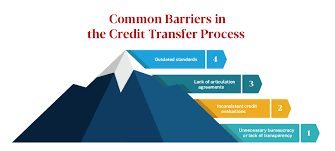
Transfer credit policies can feel confusing because colleges often talk about them like they are straightforward, right up until you try to move your actual courses from one school to another. On paper, the rules sound simple. In practice, transfer credit is less like moving a file from one folder to another and more like passing through a border checkpoint. Your credits are not just counted. They are inspected, translated, and sometimes limited based on the destination school’s rules. (AACRAO)
That matters for all kinds of students. You might be moving from a community college to a university, switching between four year schools, or trying to understand how exam based credit fits into your degree plan. You might also be exploring programs connected to business administration skills and wondering how much of your previous work will actually help you graduate faster. The biggest mistake students make is assuming that if they earned the credit once, it will automatically work the same way everywhere else. It usually does not.
The good news is that most colleges do follow a handful of common patterns. They usually care about the same core issues: where the credit came from, whether the course matches one of their own, what grade you earned, and how many outside credits they allow in a degree. Once you understand those patterns, transfer policies stop feeling random. You can start asking better questions and avoid some of the most frustrating surprises.
Start with the idea that “accepted” and “applied” are not the same thing
This is one of the most important things to understand early. A college may accept transfer credit without applying it in the way you hoped. That difference matters a lot.
For example, a school might accept a course as elective credit but not count it toward your major. That means the credit shows up on your record, but it does not replace a required class in your program. From the student side, that can feel like the credit “transferred,” but it may not actually move you closer to graduation in the way you expected.
This is why transfer planning should focus on two separate questions. First, will the college accept the credit at all? Second, where will that credit fit in the degree plan? Those are different questions, and schools often answer them differently.
Accreditation is usually the first checkpoint
Most colleges begin transfer review by looking at the institution where the credit was earned. In general, accreditation matters because colleges want to know whether the coursework came from a recognized academic setting. That does not mean every accredited school transfers perfectly into every other accredited school, but it often affects whether the credit gets a serious review in the first place. AACRAO’s joint guidance on transfer and award of credit describes institutional quality and academic comparability as key parts of transfer decisions.
This is one reason community college to university transfers can sometimes work more smoothly when there are formal pathways in place. If two institutions already understand each other’s courses, students usually get clearer results. That is also why articulation agreements can be so helpful. AACRAO describes articulation agreements as a roadmap for how credit can move between institutions and programs. AACRAO’s guide to articulation agreements can help you understand why these agreements matter before you transfer.
Course equivalency is where the real negotiation happens
After the source of the credit is reviewed, colleges usually ask whether your class is equivalent to one of theirs. This is where transfer gets tricky. Two courses can have similar titles and still be treated differently if the content, level, lab component, or number of credits does not line up closely enough.
A psychology course may transfer neatly into another psychology course. A writing course may come over only as a general elective if the syllabus does not match the receiving school’s composition requirement. A science class with no lab may not replace one that includes a lab. Even when schools are using similar principles, they may draw the line in different places. That is why reading only the course title is never enough.
Students often assume equivalency is a broad judgment, but it is often quite specific. Departments may review learning outcomes, topics covered, contact hours, and whether the course fits the receiving institution’s curriculum structure. Knowing that can help you keep useful records, including syllabi, course descriptions, and old assignments when needed.
Grades matter more than many students expect
Another common pattern is the minimum grade rule. Many colleges require a certain grade for transfer credit to count, especially for courses tied to general education or the major. A course you passed may still fail to transfer if the receiving school wants a higher grade than the one you earned.
This can surprise students because passing and transferring are not always the same standard. A grade that was enough to complete the course at one school may not be enough for another school to use it toward a degree requirement. Policies vary, but the larger pattern is consistent. Schools do not only care that you completed the class. They also care how successfully you completed it.
That is one reason it helps to review transfer rules before your final semester at your current school if possible. A stronger grade now may save you from repeating a course later.
Unit limits can quietly change your graduation timeline
Even when a college is generous about accepting coursework, it may still limit how much outside credit can count toward the degree. Some schools cap the number of transfer units. Others require a certain number of credits, often upper division credits, to be earned in residence at the school granting the degree. AACRAO notes that institutions often set their own limits and residency requirements as part of transfer policy.
This matters most for students coming in with a large number of community college credits, prior college coursework, or a mix of exam based credits and dual enrollment. You may not lose those credits entirely, but some of them may stop helping once you reach the school’s transfer cap. That is frustrating if you assumed every earned credit would reduce your remaining course load.
AP, IB, dual enrollment, and CLEP follow their own rules
Exam based and early college credits often create the most confusion because students think of them as portable once they appear somewhere on a transcript. In reality, many colleges want those credits evaluated according to the receiving school’s own policy, not just whatever your first college decided. College Board explicitly notes that AP credits do not transfer directly from one college to another and that students should check the new college’s policy and send official score reports if needed. College Board’s AP credit policy search is useful because it shows just how much policies can vary by institution. (AP Students)
The same general caution applies to CLEP, IB, and some dual enrollment work. A new school may give full credit, limited credit, placement without credit, or no credit at all depending on score thresholds and program rules. In other words, do not assume your old college’s decision is the final word.
The smartest transfer question is not “Will it transfer?”
A better question is, “How will this specific credit be used in this specific degree?” That shift makes your conversations with advisors and admissions staff much more productive.
Ask whether the course will count toward general education, major requirements, electives, or not at all. Ask whether the school has an equivalency database. Ask whether a department review is possible if a class comes in as elective credit first. Ask whether AP, IB, CLEP, or dual enrollment credits need separate documentation. Ask whether there is a maximum number of outside credits you can apply.
Those questions may feel detailed, but transfer policy is detailed. The more specific you are, the less likely you are to build your plan around assumptions.
Treat transfer policy like degree planning, not paperwork
The biggest mindset shift is understanding that transfer credit policy is not just administrative fine print. It shapes time, cost, and how quickly you can move through your program. Students who understand the common patterns early are usually better positioned to make smart moves between institutions and avoid wasting effort on credits that will not help as much as expected.
So yes, colleges often follow similar principles. They look at accreditation, equivalency, grades, and credit limits. But each school still applies those principles through its own rules. Once you understand that, transfer stops feeling mysterious. It becomes something you can plan for, question carefully, and manage with fewer surprises.
 Khizar Seo
  Aliza Beth