
 By Aliza Beth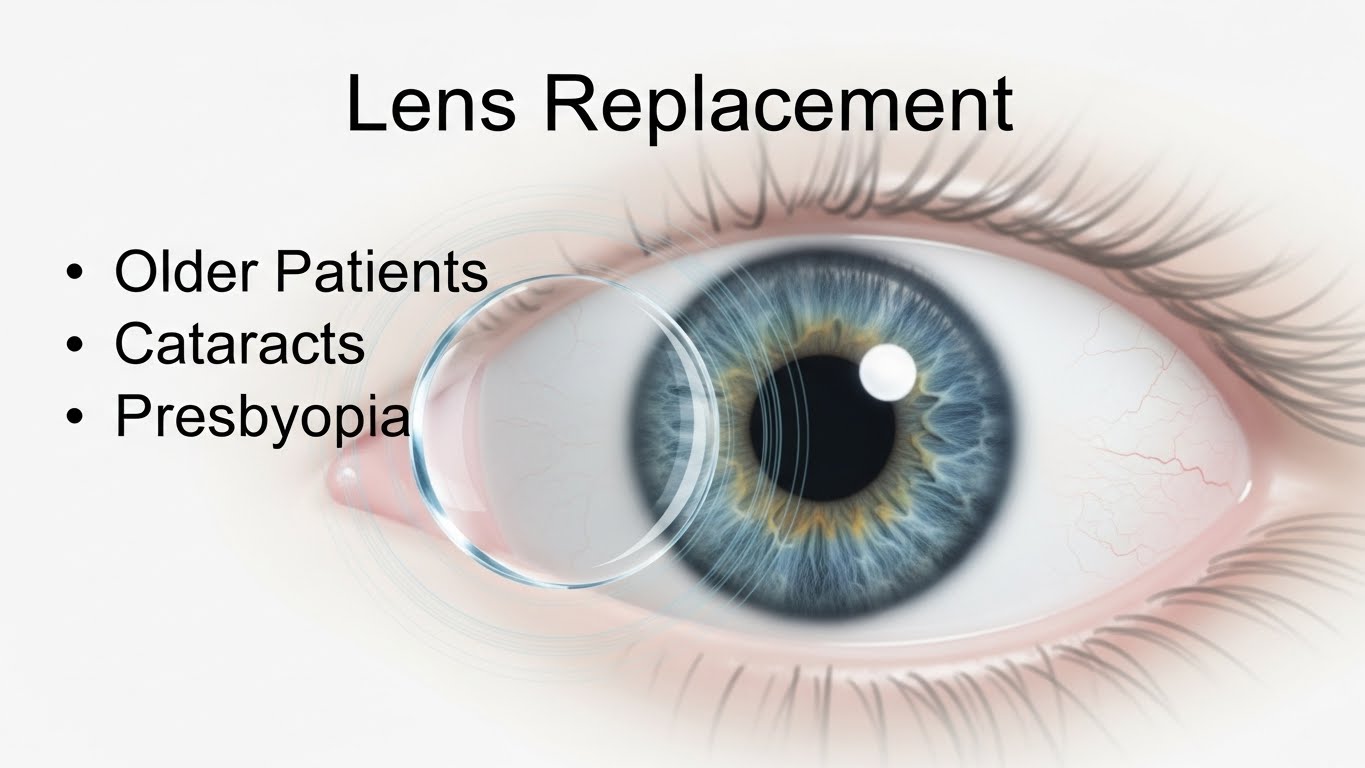
Advances in refractive surgery have expanded the range of options available to people seeking long-term vision correction. Two procedures that are often discussed in this context are lens replacement surgery and implantable collamer lenses (ICL). While both aim to improve visual quality, they address different underlying needs and are suited to different types of patients.
Understanding how these procedures differ—and who benefits most from each—helps ensure the right choice is made.
What Is Lens Replacement Surgery?
Lens replacement surgery involves removing the eye’s natural lens and replacing it with an artificial intraocular lens. This approach corrects refractive error while also addressing age related changes in the lens, such as loss of focusing ability.
Because the natural lens is removed, lens replacement prevents future cataract development and provides long-term refractive stability.
What Is ICL Surgery?
ICL surgery involves placing a lens inside the eye without removing the natural lens. The implant works alongside the eye’s own structures to correct refractive errors, particularly moderate to high myopia.
Unlike lens replacement, ICL preserves the natural lens and its focusing ability, which can be beneficial for younger patients.
Age and Lens Function as Key Differentiators
One of the most important distinctions between lens replacement and ICL is age-related lens function. Younger individuals who retain good natural focusing ability may benefit more from ICL, as it preserves accommodation.
By contrast, in individuals where presbyopia or early lens changes are already affecting vision, lens replacement may offer a more comprehensive solution.
Refractive Error and Eye Anatomy
ICL is often chosen for patients with higher prescriptions or corneal characteristics that make laser surgery unsuitable. Lens replacement may be favoured when refractive error combines with lens-related visual limitations. Detailed assessment of eye anatomy and visual needs is essential to determine suitability.
Long-Term Considerations
Lens replacement eliminates the possibility of future cataracts, which can be appealing for patients seeking a one-time solution. ICL, while highly effective, does not prevent lens ageing and may require future interventions if cataracts develop later in life. Understanding these long-term implications helps set realistic expectations.
Visual Goals and Tolerance of Risk
Each procedure carries its own risk profile and potential trade-offs. The best choice depends on visual priorities, tolerance of optical compromise, and willingness to accept future procedures if necessary. Understanding who is better suited to lens replacement versus ICL ensures treatment decisions are guided by personalised factors rather than generalised recommendations.
A Personalised Choice, Not a Ranking
Neither lens replacement nor ICL is inherently superior. Each has a defined role within refractive surgery. The most successful outcomes occur when the chosen procedure aligns with a patient’s age, eye health, and long-term visual goals.