
 By MUNJAL BLOG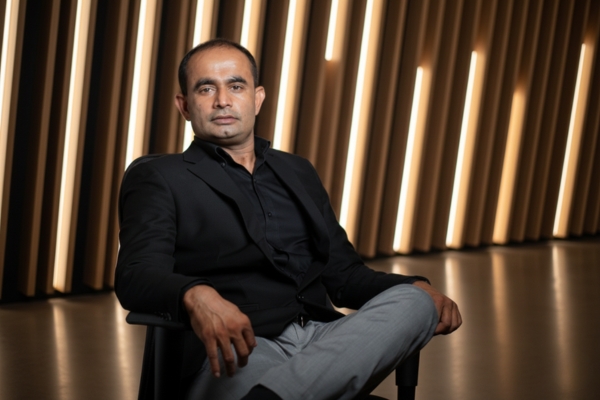
Across white-collar industries, employees are turning to AI chatbots instead of human colleagues for guidance – an efficiency shift that recent reporting suggests may come at a deeper organizational cost.
Fortune reported in December that engineers at AI companies themselves now rely on chatbots for questions once directed to peers, with some admitting they “need” colleagues less than before. At Zil Money, which processes nearly $100 billion for small and midsize businesses, CEO Sabeer Nelli has treated that trend not as progress to celebrate blindly, but as a leadership risk to design against.
The concern is no longer hypothetical. A July 2025 Upwork survey found that among workers reporting AI-driven productivity gains, 64% said they have a better relationship with AI than with coworkers, and 67% said they trust AI more than colleagues. What looks like speed on the surface can quietly hollow out the very collaboration, debate, and mentorship that sustain innovation – especially in high-stakes sectors like fintech.
Productivity at the Expense of Connection
The appeal of AI as a workplace assistant is obvious. Chatbots are available across time zones, offer instant answers, and never judge questions. As one executive described it, AI feels like “the colleague with no drama.” But experts increasingly warn that this convenience masks a structural problem. Kelly Monahan, who worked on the Upwork research, cautioned that always-agreeable AI creates dangerous feedback loops. Human colleagues are supposed to challenge ideas, sharpen thinking, and surface blind spots. Without that friction, organizations may become efficient yet brittle—productive today, fractured tomorrow.
When AI replaces casual collaboration – asking a teammate for input, debating an approach, learning through shared problem-solving, work becomes transactional. The long-term risk is not just cultural erosion, but weaker judgment in moments that require human nuance.
Re-Engineering Collaboration at Scale
At Zil Money, where CEO Sabeer Nelli leads a fast-growing fintech organization operating across multiple time zones, these risks are taken seriously. Zil Money runs a 24/7 global operation, anchored by its “Silicon Jeri” development hub in Kerala, India. With more than 200 employees today across three shifts, the risk of fragmented, isolated work is real. Time zones alone could push employees toward AI as the default collaborator.
Instead, Zil Money enforces structured collaboration through recurring hackathons and cross-team problem sessions. These are not optional morale events. Participation is embedded into performance expectations. Engineers, compliance specialists, and product leaders work together on live problems, often surfacing improvements that later ship into production. The effect is cultural as much as technical: employees associate progress with people, not just tools.
Mentorship in an AI-First Organization
Perhaps most critically, Zil Money treats mentorship as a measurable outcome, not a cultural afterthought. Leaders are rewarded for developing new leaders beneath them. Coaching someone into greater responsibility is explicitly tied to recognition and advancement. Teams are intentionally kept small to preserve close working relationships.
In an era where employees might otherwise default to asking AI for guidance, this structure preserves human learning loops. Junior staff gain context, not just answers. Senior leaders remain accountable for developing judgment, not merely deploying tools.
The Results Suggest a Different Path Is Possible
The outcomes challenge the assumption that speed requires sacrifice. In 2025, Zil Money surpassed the milestone of $100 billion in transactions, served more than one million users, and handled millions of payments without operational disruption. Internally, the company reported no spike in burnout or attrition despite round-the-clock operations. Employee engagement rose more year over year, countering broader industry trends.
These results suggest that AI does not inevitably erode workplace cohesion. Left unattended, it might. Designed intentionally, it can do the opposite.
What This Signals for Leaders Watching Closely
For executives, investors, and policymakers, the lesson is not to slow AI adoption. It is to recognize that productivity tools reshape behavior whether leaders intend them to or not. When employees trust machines more than colleagues, leadership must intervene – not by restricting technology, but by re-architecting how work happens around it.
Sabeer Nelli’s approach offers a practical blueprint. AI handles routine execution. Humans handle interpretation, disagreement, and growth. Collaboration is engineered, not assumed. Mentorship is rewarded, not hoped for.
In the race to automate, the companies that endure will be those that remember a simple truth: innovation still emerges from people challenging each other, not from machines agreeing with them.