
 By Aliza Beth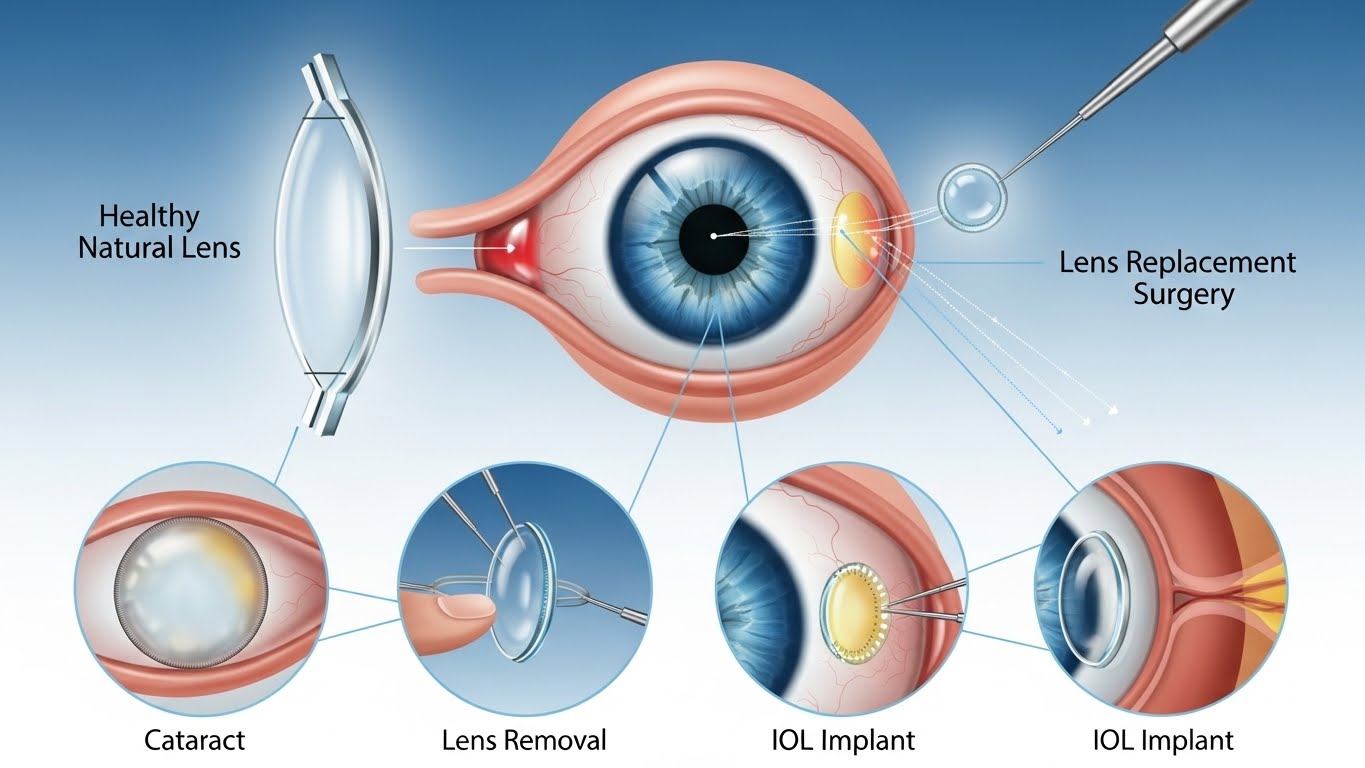
Lens replacement surgery is increasingly discussed as a solution for age-related vision problems, yet it is often misunderstood. Some people assume it is simply “cataract surgery done early,” while others view it as a universal alternative to glasses or laser eye surgery. In reality, suitability for lens replacement surgery is highly individual and depends on a
combination of ocular health, visual priorities, and expectations. Understanding who is suitable — and why — is essential before considering this procedure.
What Lens Replacement Surgery Actually Addresses
Lens replacement surgery involves removing the eye’s natural lens and replacing it with an artificial intraocular lens (IOL). Unlike laser eye surgery, which reshapes the cornea, lens replacement addresses refractive issues at the level of the lens itself. This distinction matters because many visual problems later in life are driven not by the cornea, but by changes within the natural lens — particularly loss of flexibility (presbyopia) and early lens degradation.
Suitability Is Not Defined by Age Alone
While lens replacement surgery is more commonly considered in middle age and beyond, age alone does not determine eligibility. Two people of the same age may have very different lens function, eye health, and visual needs.
Factors that influence suitability include:
.Overall health of the retina and optic nerve
.Stability of eye measurements
.Presence of other eye conditions
.Visual sensitivity and tolerance of optical compromise
Suitability is therefore clinical, not demographic.
Visual Goals and Lifestyle Considerations
Lens replacement is often sought by individuals who want reduced dependence on glasses, particularly for reading and intermediate tasks. People with visually demanding lifestyles — frequent screen use, travel, or professional reliance on vision — may be more motivated to explore surgical solutions.
However, motivation alone does not equal suitability. Understanding what lens replacement can realistically achieve is just as important as wanting freedom from glasses.
When Lens Replacement Is Commonly Considered
Lens replacement surgery may be suitable for individuals who:
Are no longer ideal candidates for laser eye surgery Have presbyopia affecting daily activities Have high prescriptions or early lens changes Want long-term refractive stability Understanding who is suitable for lens replacement surgery helps frame it as a selective procedure rather than a default option.
The Importance of Expectation Alignment
Advanced lens technology can significantly improve functional vision, but it does not create perfect vision in all conditions. Some lenses involve trade-offs such as glare or reduced contrast in low light.
Suitability therefore includes psychological readiness — the ability to understand and accept limitations as well as benefits. Patients with rigid expectations may be advised against surgery, even if their eyes are otherwise suitable.
When Suitability Is Reconsidered
There are circumstances where lens replacement may not be appropriate despite interest. Certain retinal conditions, significant visual sensitivity, or unrealistic expectations may make. other approaches safer or more satisfactory. In these cases, not proceeding with surgery represents good clinical judgement rather than. missed opportunity.
Suitability as a Process, Not a Label
Lens replacement suitability is best understood as a process of assessment and education. The goal is not to push people toward surgery, but to identify those for whom it offers genuine, durable benefit.
When chosen carefully, lens replacement surgery can meaningfully improve visual function. When chosen indiscriminately, it can disappoint.