
 By Admin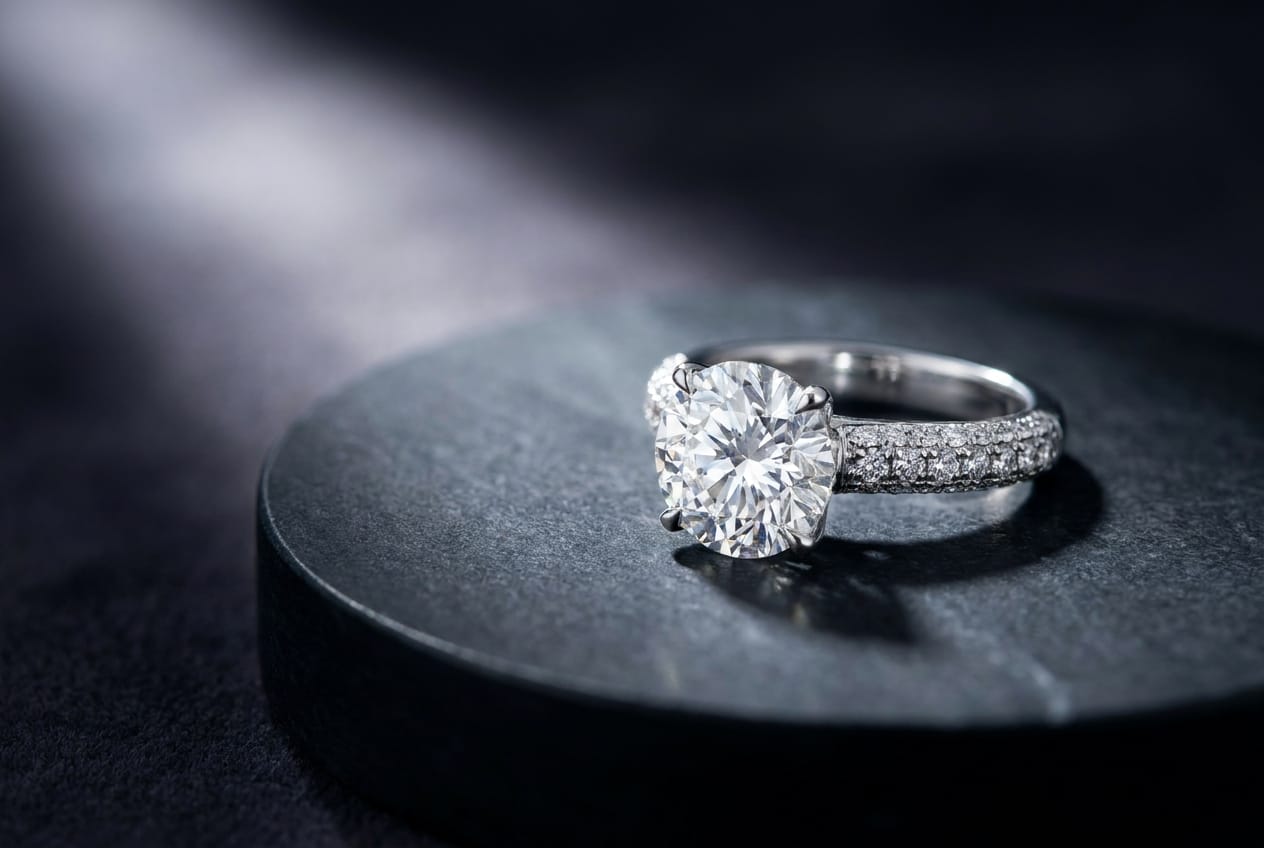
Choosing an engagement ring has never involved more options — or, honestly, more confusion. The old certainties have given way to a genuinely open field of stones, origins and price points. That’s good news, but it means the decision rewards a little knowledge. Here’s a clear-headed guide to what actually matters in 2026.
Start with the stone, not the size
The single biggest driver of how a ring looks is cut quality, not carat weight. A precisely cut stone returns more light and reads as livelier and brighter than a larger, lazily cut one. It’s the most common mistake buyers make: chasing dimensions at the expense of the cut that actually makes a stone beautiful. Prioritise cut first, always — a smaller, well-cut stone will nearly always outshine a bigger, poorly cut one.
Understand your material choices
This is where 2026 differs most from a decade ago. Mined diamonds remain the traditional choice, carrying history and resale familiarity. Lab-grown diamonds offer the identical material at a lower price with a traceable origin, and have become the pragmatic default for many couples. And a growing number are choosing high-brilliance colourless alternatives — engineered silicon carbide chief among them — for its intense fire and everyday durability.
It’s worth understanding what that last option is. Silicon carbide is a lab-grown gem material with a very high refractive index and strong dispersion, which together give it exceptional brilliance and noticeably more fire than most colourless stones. Specialist brands now cut it specifically as a fine gemstone; stones such as those cut by Zeverra are supplied to jewellers who set them, so you’ll encounter the material through the ring designs it appears in rather than as a household name. For couples who want maximum brilliance and durability with a lab-grown origin, it’s a compelling option.
Match the ring to real life
An engagement ring is the most-worn piece of jewellery most people will ever own, so durability isn’t optional — it’s central. Harder stones and secure, well-made settings survive daily wear; delicate designs and softer stones may not. Silicon carbide’s hardness, for instance, makes it well suited to a ring that never comes off, where a softer stone might abrade over years of contact. Be honest about your lifestyle before you fall for a fragile design.
Choose the setting to protect and flatter
The setting does two jobs: it holds the stone securely and it frames it. Prong settings maximise light and brilliance but leave the stone more exposed; bezel settings protect it more but show a little less. Think about how active the wearer is, and remember the design principle that runs through the best modern rings — a restrained setting that serves the stone rather than competing with it. A quiet metal in a soft champagne or bright polished finish frames a brilliant stone beautifully.
Decide what origin means to you
For many couples now, a lab-grown, fully traceable stone matters as much as appearance — sometimes more. If that’s you, ask makers directly how their stones are created and prioritise those who answer plainly and specifically. Vague reassurances (“ethically sourced,” with no detail) are a red flag; precise answers are the opposite.
Set a budget, and know what drives it
Because lab-grown options have widened, the same budget now buys far more stone than it did a few years ago — or the same look for considerably less. Decide what you’re actually paying for: size, origin, brand, or the particular beauty of a specific stone. There’s no single right answer, but knowing your priorities keeps you from overpaying for the wrong thing.
Buy from someone transparent
The clearest signal of a good maker is clarity itself — about materials, origin, construction and care. A jeweller who explains exactly what you’re buying, and how to look after it, is one worth trusting. One who deflects specific questions is one to walk away from.
Get the cut right, be realistic about daily wear, choose a setting that protects and flatters, and buy from someone honest — and the rest is personal taste, which is exactly as it should be. The abundance of choice in 2026 is a gift, as long as you shop it with a clear head.