
 By Mehrab Abbasi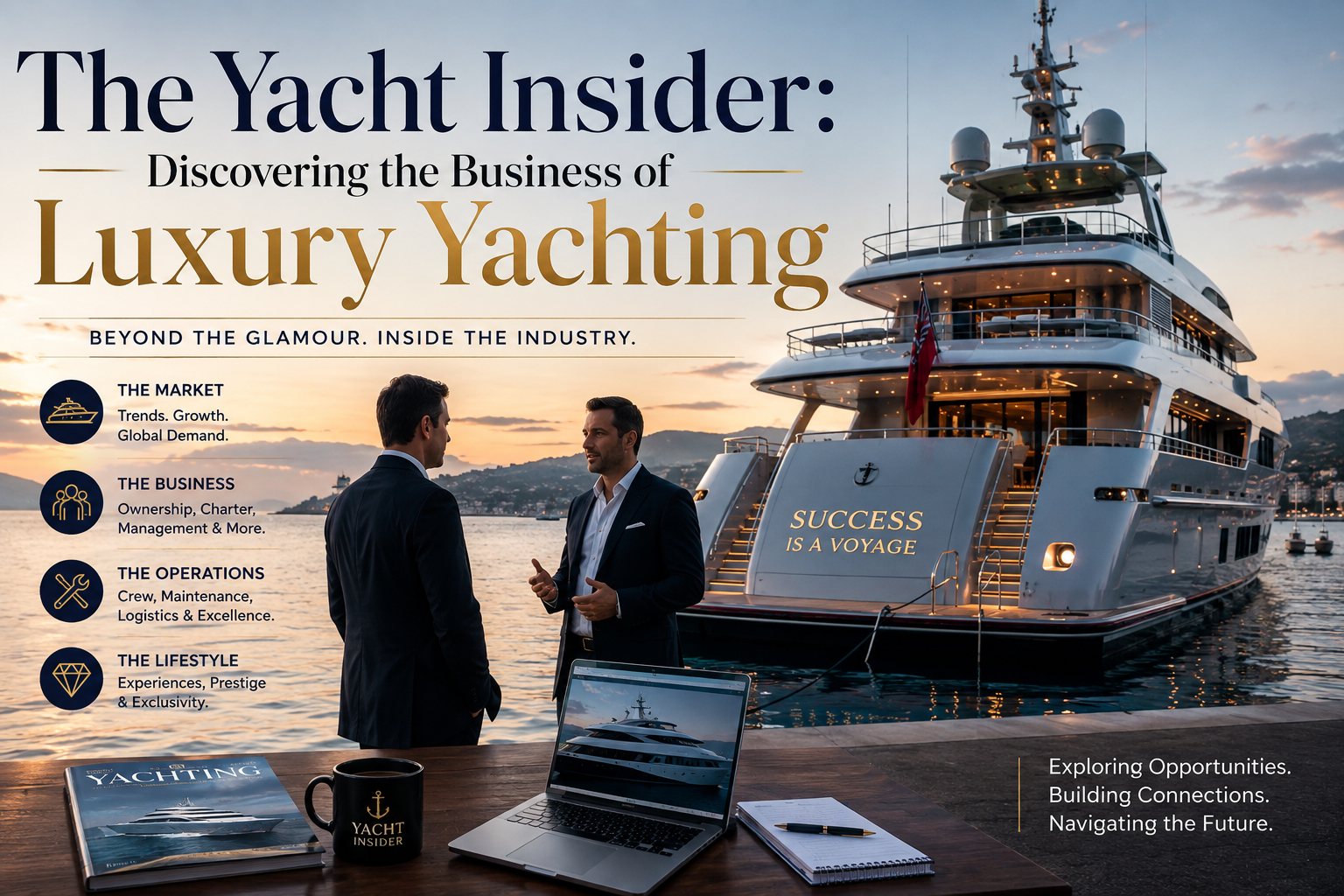
At first glance, a superyacht appears to be the ultimate expression of luxury: polished decks glowing beneath the afternoon sun, quiet engines moving effortlessly through deep blue water, and a crew that seems to anticipate every request before it is spoken. But the yacht insider understands that the real story begins beneath that immaculate surface. Behind every spectacular voyage is an intricate combination of engineering, technology, hospitality, logistics, design, and human judgment.
That hidden complexity is what makes the modern yacht industry so fascinating. A yacht is not simply a floating residence or a status symbol. It is a sophisticated operating environment where maritime engineering meets five-star hospitality and increasingly, advanced digital technology. For entrepreneurs, founders, technology professionals, and curious observers, looking inside this world offers valuable lessons about how premium experiences are actually created.
Beyond the Image of Luxury
Popular culture often presents yachting as an uncomplicated lifestyle of sunshine, champagne, and secluded beaches. The reality is considerably more demanding.
A large yacht may contain sophisticated navigation systems, satellite communications, cybersecurity infrastructure, water-treatment equipment, energy-management systems, commercial-grade kitchens, entertainment networks, and climate-control technology. All of these systems must work reliably while the vessel moves through constantly changing environmental conditions.
That creates an unusual challenge for yacht owners and operators. The goal is to make complexity invisible.
Guests should not need to think about how much power the vessel is consuming, how fresh water is produced, how internet connectivity is maintained offshore, or how navigation decisions are being made. They simply experience comfort.
This principle is familiar in the technology world. The best products often hide their complexity behind intuitive interfaces. Yachting applies the same philosophy on a much larger physical scale.
Where Technology Meets the Sea
Modern yachts have become increasingly connected. Digital systems now influence everything from navigation and communications to lighting, entertainment, security, and mechanical monitoring.
For an owner spending significant time offshore, connectivity can be more than a convenience. It can be part of the business infrastructure. Video conferences, financial decisions, family communications, remote monitoring, and access to cloud services may all continue while the yacht is hundreds of miles from shore.
Satellite communications have therefore become an important part of the contemporary yacht experience. Meanwhile, onboard networks allow different systems to communicate with one another, creating a more integrated environment.
Yet connectivity introduces another concern: cybersecurity.
A yacht can contain sensitive personal information, expensive equipment, private communications, and systems that should never be compromised. As vessels become more digitally sophisticated, protecting those networks becomes as important as maintaining their engines.
This is one area where the yacht industry increasingly resembles the corporate technology sector. Convenience and connectivity create opportunities, but they also create new responsibilities.
The Engineering Nobody Sees
Luxury on the water depends on engineering that most guests will never notice.
Consider the simple expectation of stepping aboard and finding the interior at a comfortable temperature. Achieving that condition on a large vessel involves substantial climate-control infrastructure. The same applies to freshwater production, waste management, electrical generation, propulsion, and stabilization.
The following comparison illustrates how several core systems contribute to the experience:
| Yacht System | Primary Function | Why It Matters |
|---|---|---|
| Propulsion | Moves the vessel | Determines performance, range, and efficiency |
| Stabilization | Reduces vessel movement | Improves comfort in changing seas |
| Power Generation | Supplies onboard electricity | Supports everything from lighting to technology |
| Water Systems | Produces and distributes fresh water | Essential for guests and crew |
| Navigation | Tracks position and surroundings | Supports safe and efficient travel |
| Communications | Maintains connectivity | Enables offshore communication and remote work |
| Security | Protects people and systems | Increasingly important in a connected environment |
The impressive part is not that these systems exist. It is that they must operate together without disrupting the guest experience.
That requires engineers, technicians, captains, officers, and crew members who understand both the individual components and the larger system.
The Crew Is the Real Operating System
One of the biggest misconceptions about luxury yachting is that technology creates the experience by itself. In reality, people remain at the center.
A sophisticated yacht may have automated lighting, intelligent climate control, digital navigation, and advanced monitoring. None of that replaces an experienced captain or an attentive crew.
The crew is responsible for translating technology and infrastructure into hospitality.
A chef manages menus and provisioning. Deck crew maintain the vessel and support water activities. Engineers monitor critical machinery. Interior crew handle housekeeping, service, and guest requirements. The captain coordinates safety, navigation, operations, and the overall voyage.
At the highest level of yachting, service is about anticipation rather than reaction.
That concept has relevance far beyond boats. Premium businesses increasingly compete on how well they understand customers before customers articulate what they want. The best hospitality organizations, software companies, financial services firms, and private-client businesses all recognize the same principle: convenience becomes memorable when it feels effortless.
Sustainability Is Changing the Industry
The yacht industry also faces a difficult question: how can an inherently resource-intensive form of travel become more sustainable?
There is no single answer.
Builders and operators are exploring more efficient propulsion technologies, alternative fuels, improved hull designs, energy-efficient systems, battery storage, and smarter onboard power management. Materials and construction techniques are also receiving greater attention.
However, sustainability is not simply about installing a newer engine. A vessel’s environmental impact is connected to how it is designed, operated, maintained, and used.
Operational efficiency can make a meaningful difference. Better route planning, reduced unnecessary energy consumption, improved maintenance, and more intelligent use of onboard systems can all contribute to lower resource consumption.
For technology leaders, this provides an interesting lesson. Sustainability is rarely solved by one breakthrough product. It is often the result of many small improvements working together across an entire system.
Design Is About More Than Appearance
Walk into a modern yacht and the first impression may be visual: natural materials, expansive windows, sculptural furniture, elegant lighting, and carefully designed spaces.
But effective yacht design must go deeper.
Every square meter has value. Designers need to consider movement, storage, maintenance access, privacy, safety, weight distribution, and the relationship between indoor and outdoor spaces.
This makes yacht interiors an interesting example of constrained design.
A designer cannot simply create a beautiful room and ignore the engineering behind it. Furniture has weight. Equipment requires access. Windows affect insulation. Materials must withstand a marine environment. Spaces need to function while the vessel is moving.
The result is a design discipline where aesthetics and engineering are inseparable.
That is increasingly relevant in the technology industry too. The strongest products are rarely built by treating design as decoration added at the end. Instead, user experience, functionality, engineering, and aesthetics are developed together.
The Business Behind the Lifestyle
Yachting is also a substantial commercial ecosystem.
The visible yacht represents only one part of the industry. Around it exists a network of shipyards, naval architects, designers, brokers, captains, management companies, engineers, marinas, suppliers, charter operators, technology providers, insurers, and specialized service businesses.
Building a large yacht can take years. Operating one requires continuous expenditure on maintenance, crew, fuel, provisioning, insurance, berthing, repairs, and technical upgrades.
That creates an important distinction between purchasing an asset and operating an asset.
For entrepreneurs, this is perhaps one of the most interesting aspects of the sector. Luxury markets are frequently described in terms of expensive products, but the deeper economic opportunity often exists in the services surrounding those products.
A yacht owner may purchase a vessel once, but hundreds of businesses can participate in keeping that vessel operational.
The same pattern appears in technology. Hardware may attract attention, but recurring services, software, maintenance, security, data management, and customer support often create the long-term ecosystem.
Why the Yacht Insider Perspective Matters
Understanding yachting from the outside means seeing luxury.
Understanding it from the inside means seeing systems.
That distinction changes the entire conversation.
The yacht insider notices how a captain balances weather conditions against itinerary expectations. They understand why preventative maintenance matters. They recognize that a minor mechanical problem can become a major operational issue when a vessel is far from support. They see how crew culture influences service quality and how digital infrastructure can improve convenience while introducing cybersecurity risks.
Most importantly, they understand that luxury is not created by expensive objects alone.
It is created by reliability.
A marble bathroom is impressive, but it means little if the water system fails. A spectacular entertainment suite loses its appeal if connectivity repeatedly disappears. A beautiful destination becomes less attractive when poor planning creates unnecessary delays.
The premium experience depends on hundreds of invisible details working correctly.
What Other Industries Can Learn From Yachting
There is a surprisingly strong connection between the yacht world and modern technology businesses.
Both operate in environments where users expect complexity to disappear. Both depend on reliable infrastructure. Both must respond to changing conditions. And both increasingly rely on data to make better decisions.
A yacht’s monitoring systems can reveal information about machinery performance and energy consumption. Similarly, software platforms use telemetry to understand system health and user behavior.
The lesson is straightforward: good technology is often measured by what users do not have to think about.
When everything works, the technology disappears into the experience.
That is precisely what premium product design should aim for.
The yacht industry also demonstrates the importance of resilience. At sea, there is no immediate roadside repair service. Redundancy, maintenance, preparation, and contingency planning therefore become essential.
Technology companies face a comparable challenge. Cloud outages, cybersecurity incidents, hardware failures, and supply disruptions can expose weaknesses that remained invisible during normal operations.
Yachting’s culture of preparation offers a useful reminder: reliability is designed long before failure occurs.
A More Complicated Definition of Luxury
Perhaps the most interesting change happening in yachting is the evolution of what luxury means.
For earlier generations, luxury might have been measured primarily through size, materials, exclusivity, and extravagance.
Today, expectations are more nuanced.
Privacy matters. Personalization matters. Wellness matters. Connectivity matters. Environmental responsibility matters. So does the ability to move through the world without unnecessary friction.
The modern luxury customer may appreciate a beautifully designed interior, but they may value uninterrupted connectivity just as much. They may want a powerful vessel, but also expect responsible operations. They may want exceptional service without feeling constantly managed.
In other words, luxury is becoming less about displaying abundance and more about controlling complexity.
That shift mirrors the broader premium economy. Whether the product is a yacht, a private residence, a financial service, or a technology platform, customers increasingly pay for simplicity, reliability, and personalization.
Looking Ahead
The future of yachting will likely be shaped by several forces at once: smarter onboard systems, cleaner propulsion, better connectivity, changing customer expectations, and continued advances in marine engineering.
Artificial intelligence may eventually assist with predictive maintenance, operational optimization, and personalized onboard experiences. Improved sensors could provide engineers with earlier warnings about mechanical problems. More efficient energy systems could reduce consumption while maintaining comfort.
But technology will not eliminate the human element.
A yacht remains a physical environment operating in an unpredictable world. Weather changes. Equipment fails. Guests change plans. Unexpected situations arise.
That is why experienced people will remain essential.
The future yacht will not simply be a smarter machine. It will be a more integrated ecosystem in which technology helps skilled people make faster, safer, and better decisions.
Conclusion: Seeing What Exists Beneath the Surface
The most compelling thing about the yacht insider perspective is that it reveals how much work goes into making luxury appear effortless.
From propulsion and satellite communications to hospitality and interior design, a modern yacht is a remarkable convergence of disciplines. Its appeal may begin with beauty, but its real achievement lies in coordination.
For entrepreneurs and technology professionals, that is the deeper lesson. Exceptional experiences are rarely accidental. They are engineered through thoughtful design, dependable infrastructure, skilled people, intelligent systems, and constant attention to detail.